Students can spend months preparing for competitive exams such as CAT, XAT, NMAT and SNAP, yet feel anxious when the actual examination approaches.
They may know the concepts, have attempted mock tests and followed a study plan, but still experience panic, self-doubt or difficulty concentrating.
So, why do students panic even after preparing well?
The reason is not always a lack of preparation. Exam anxiety can also come from the fear of failure, high expectations, family pressure and uncertainty about the results.
These thoughts can affect a student’s ability to recall information and make decisions during an examination.
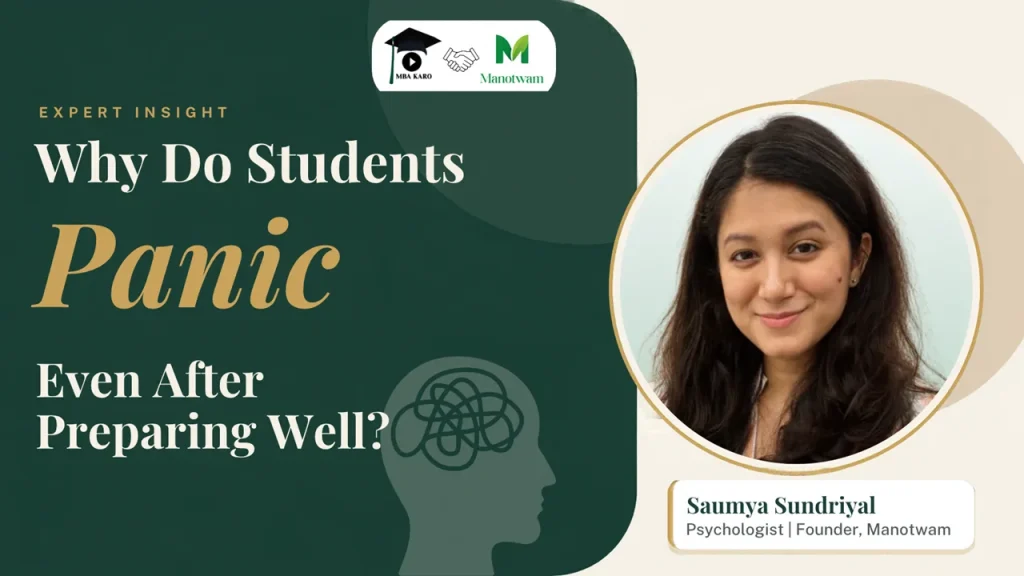
In this article, Saumya Sundriyal, Psychologist, Therapist, Mental Health Speaker and Consultant, explains five psychological reasons behind exam panic and practical ways students can manage it.
Why Do Students Panic Even After Preparing Well?
Being academically prepared and feeling mentally ready for an examination are two different things. Students may have the required knowledge but struggle to access it when they feel overwhelmed by pressure.
Here are five psychological reasons why well-prepared students may experience exam anxiety.
1. Fear of Failure
For many students, an examination represents more than an opportunity to score good marks. They may connect their results with their intelligence, abilities and future career prospects.
This creates a fear of failure. Students start thinking about what could happen if they do not achieve their target score. The possibility of disappointing themselves or their families can make the examination feel more stressful.
2. Anxiety Affects Working Memory
Working memory helps students hold and process information while solving questions. However, anxiety can interfere with this process.
When students become stressed, their attention may shift towards thoughts such as, “What if I cannot solve this question?” or “What if I run out of time?” These thoughts compete for mental resources.
As a result, students may struggle with questions they have solved correctly during practice. Research by Beilock and Carr (2005) explains how pressure can affect working memory and performance, particularly during demanding tasks.
3. Perfectionism Creates Additional Pressure
Students who prepare consistently may develop unrealistic expectations of their performance. They may believe that studying for several months means they should not make mistakes in the examination.
Thoughts such as “I cannot afford to get this question wrong” increase pressure. Even a difficult question can trigger self-doubt and affect their confidence.
The expectation of performing perfectly can make it harder to approach an examination calmly.
4. Fear of Disappointing Parents
Family expectations can influence how students experience competitive examinations. Some students feel responsible for meeting their parents’ expectations or justifying the time, money and effort invested in their preparation.
Social comparisons can add to this pressure. When students compare their mock scores or preparation progress with others, they may start questioning their own abilities.
Consequently, an examination can feel like a judgment of their personal worth rather than an assessment of their academic knowledge.
5. Uncertainty Triggers Anxiety
Even well-prepared students cannot predict every aspect of an examination. The actual paper may include unfamiliar questions, unexpected difficulty levels or time-consuming sections.
This uncertainty can create anxiety, particularly among students who are comfortable with planned preparation but find unexpected situations difficult to handle.
The fear of not knowing what to expect can make students panic even when they have covered the syllabus.
How Can Students Manage Exam Anxiety?
Students do not need to eliminate nervousness completely to perform well. They can develop habits that help them manage pressure and stay focused.
- Separate marks from self-worth: Your examination score does not define your intelligence, abilities or potential.
- Practise under exam conditions: Attempt mock tests with actual time limits to become familiar with examination pressure.
- Accept nervousness: Feeling anxious before an important examination does not mean your preparation is inadequate.
- Focus on controllable factors: Pay attention to your approach, time management and response to difficult questions rather than worrying about the final result.
- Prioritise sleep: Adequate rest supports attention, memory and concentration, which are important during examinations.
What Is the Psychological Takeaway for MBA Aspirants?
Preparation builds knowledge, but psychological readiness helps students use that knowledge under pressure. Students should understand that experiencing anxiety does not automatically indicate poor preparation.
The objective is not to eliminate every nervous thought but to learn how to respond to it without allowing it to control examination performance.
This is also why MBA Karo wanted students to have access to structured psychological support throughout their preparation. Manotwam has been onboarded as the Official Mental Wellbeing Partner of MBA Karo.
Manotwam, meaning “Your Mind” in Sanskrit, is a mental health practice founded by psychologist Saumya Sundriyal.
Through this association, MBA Karo aims to make psychological support an accessible part of students’ preparation journey, alongside academic guidance.